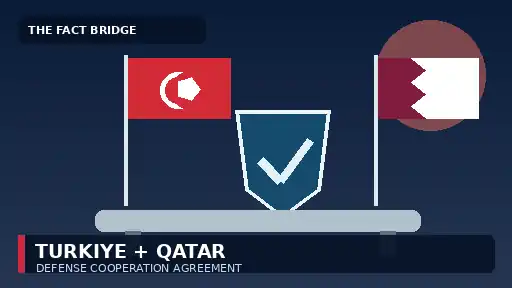
ISTANBUL, Nov. 14, 2026 — Qatar and Türkiye have signed a mutual defense cooperation agreement that deepens their military relationship and commits the two governments to closer coordination on security, training and defense industry projects.
The agreement was signed in Istanbul on Friday, Nov. 13, during the 12th meeting of the Qatar-Türkiye Supreme Strategic Committee. Turkish President Recep Tayyip Erdoğan and Qatar’s Emir Sheikh Tamim bin Hamad Al Thani chaired the meeting, according to official statements from both governments. Reuters reported the agreement as a mutual defense pact, while the joint communiqué described a broader program of security and defense cooperation.
What the agreement says
The public statements identify several areas for cooperation, including military training, joint exercises, defense industries, exchange of expertise and closer coordination between the two countries’ armed forces. The communiqué also says the governments will maintain a unified position against external attacks and consult on security developments that affect their interests.
That language is significant, but it should not be confused with a fully detailed public treaty that automatically commits one country to enter a war if the other is attacked. The governments have not released a complete operational text explaining how a response would be triggered, what forces would be committed or what legal procedures would apply. Until those details are published, the agreement is best understood as a formal strengthening of defense cooperation rather than a guarantee of a specific military response in every possible scenario.
The pact builds on a relationship that has expanded over the past decade. Türkiye has maintained a military presence in Qatar, and the two governments have worked together on training, security and regional diplomacy. Their ties became especially visible during the 2017 Gulf diplomatic crisis, when Qatar faced a blockade by several neighboring states and Türkiye provided political and practical support.
Why the timing matters
The agreement comes as governments across the Middle East are reassessing security risks, military partnerships and the consequences of regional conflict. Qatar has sought to balance close security ties with the United States with diplomatic relationships across the region. Türkiye, meanwhile, is a NATO member with its own military and diplomatic interests in the Middle East, the Black Sea and the eastern Mediterranean.
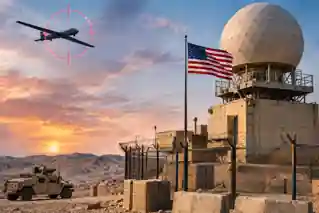
For Washington, both countries matter. Qatar hosts the U.S. military’s Al Udeid Air Base, a major hub for American air operations in the region. Türkiye is part of NATO’s collective defense structure and controls access to key waterways linking the Black Sea and Mediterranean. A closer Qatar-Türkiye security relationship could therefore affect how regional partners coordinate, even though the pact does not replace either country’s existing relationships with the United States or NATO.
The two governments also discussed economic and energy cooperation at the committee meeting. Qatar is a major supplier of liquefied natural gas, while Türkiye is an important energy transit and consumer market. Greater cooperation in infrastructure, investment and trade could reinforce the strategic relationship beyond military affairs.
What it means for U.S. readers
The agreement is not evidence that Qatar or Türkiye is preparing for a specific military operation. It is a signal that both governments want a more structured partnership and more options for responding to security challenges. For U.S. policymakers, the main questions will be how the pact fits with existing American commitments, whether it improves regional stability and whether the governments publish clearer details about the obligations they have accepted.
For now, the public record supports a measured conclusion: Qatar and Türkiye have moved to formalize deeper defense cooperation, but the practical scope of the agreement will depend on follow-up arrangements, exercises and any additional legal text released by the two governments.
Sources and reporting credit
- Reuters: Turkey and Qatar sign mutual defence agreement, Turkish presidency says
- Turkish Ministry of Foreign Affairs: Joint communiqué of the 12th Türkiye-Qatar Supreme Strategic Committee
- Qatar Ministry of Foreign Affairs: Joint communiqué
- NATO: Member countries
- U.S. Air Forces Central: 379th Air Expeditionary Wing at Al Udeid